Singles vs Sealed Packs: Which is the Better Investment in 2026?
Singles vs sealed packs investment showdown: which offers better ROI in 2026? Data-driven analysis of price trends, market risks, and opportunities.
Singles vs Sealed Packs: Which is the Better Investment in 2026?
The singles versus sealed debate has dominated collector forums since late 2024, and entering 2026, the investment calculus has shifted dramatically. With sealed wax prices climbing 18-27% year-over-year across major sports products and graded singles experiencing unprecedented population inflation, understanding which avenue offers superior risk-adjusted returns has never been more critical.
This analysis examines current market data, evaluates ROI potential across product categories, and provides actionable guidance for collectors navigating today's investment landscape.
The Case for Sealed Product Investment in 2026
Sealed boxes and cases have historically served as the hedge against singles market volatility. When vintage sealed product from the 1980s-1990s began breaking auction records in 2020-2022, institutional investors took notice. That momentum hasn't stopped.
Current sealed market dynamics:
- Premium modern releases (Topps Chrome, Bowman Chrome, Prizm) now command 40-60% premiums over release-day pricing within 18 months
- Vintage sealed product (pre-2000) continues appreciating at 12-15% annually, outpacing most blue-chip singles
- Allocation scarcity has created artificial supply constraints, particularly in basketball and football
- Storage and condition management remain straightforward compared to individual card preservation
The sealed investment thesis rests on scarcity: every box opened permanently reduces supply. As collectors chase rookie cards like  Jasson Dominguez or
 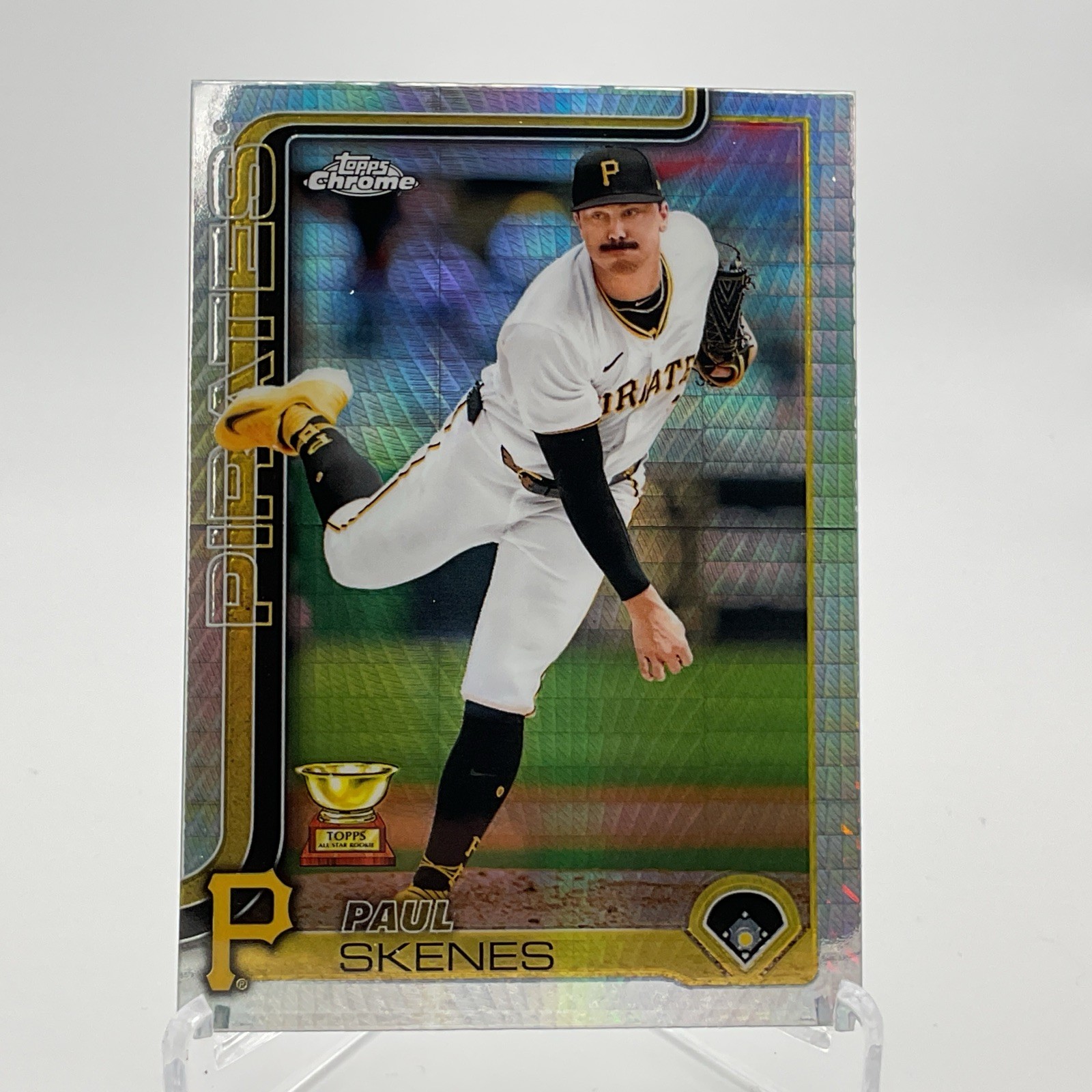 Paul Skenes, unopened product becomes exponentially rarer.
However, sealed investing carries distinct risks in 2026:
Overproduction concerns plague modern releases. Panini and Topps have dramatically increased print runs since 2023, and while initial allocation creates scarcity theater, long-term supply may not support current premiums. Additionally, sealed products tie up significant capital—a single case can run $3,000-$12,000—with zero liquidity until sale.
Why Singles Dominate the 2026 Investment Conversation
Targeted singles acquisition offers precision that sealed products cannot match. When you buy a  Elly De La Cruz autograph or
  Caitlin Clark Silver Prizm, you're investing in specific player performance, not gambling on pack odds.
Singles investment advantages:
- Liquidity: High-grade rookies and key vintage cards trade daily with transparent pricing
- Selectivity: Capital flows directly to established stars or carefully researched prospects
- Portfolio diversification: $5,000 buys 10-20 strategic singles versus one sealed case
- Performance tracking: Individual card price trends provide immediate market feedback
The 2025 market demonstrated singles' resilience. While sealed football products stagnated amid QB draft class concerns, elite singles like  Jackson Holliday Bowman Chrome autos gained 65-80% as his major league arrival approached.
The Grading Population Problem
PSA processed 16.7 million cards in 2025, flooding the market with high-grade copies of previously scarce rookies. This population inflation devastated certain singles investments—common rookies that once commanded $400-600 in PSA 10 now struggle to fetch $150-200.
Smart singles investors now prioritize:
- True rookie cards (not prospect/draft cards that saturate populations)
- Low-pop parallels and serial-numbered variants
- Vintage pre-1980 material where gradeable supply remains finite
- Autographs and game-used cards with inherent scarcity
Is Sealed Product Worth Buying in 2026?
For investors with $10,000+ allocations and 5-10 year horizons, sealed product offers compelling asymmetric upside. Vintage sealed wax remains the safest bet—unopened 1986-1989 Fleer basketball boxes have never decreased in value over any three-year period.
Modern sealed investing demands ruthless selectivity. Products worth serious consideration:
Baseball: Bowman Chrome (first-year prospects create enduring demand), Topps Chrome flagship
Basketball: Prizm (market standard), Select (gaining sealed premium)
Football: Avoid overproduced base; focus on Optic and limited Prizm variants
Hockey: Upper Deck Series 1 with generational rookies like 🃏 Connor Bedard maintain sealed premiums
Critical sealed investment rule: Only buy products featuring legitimate generational talent. A 2025 Bowman case without a Skenes/Holliday equivalent is speculative gambling, not investment.
Singles Investment Strategy for 2026 Market Conditions
The optimal singles approach in 2026 balances established blue-chips with calculated speculation on ascending young stars.
Tier 1: Foundation Holdings (40-50% of portfolio)
Vintage Hall of Famers and modern GOATs provide portfolio stability. PSA 8-9 examples of Mickey Mantle, Michael Jordan rookies, and authenticated Brady/Mahomes rookies have weathered every market correction since 2020.
Tier 2: Emerging Superstars (30-40% of portfolio)
Players entering their prime with 3-5 years of proven production offer growth with manageable risk. Target 🃏 Shohei Ohtani rookies,  Justin Herbert Prizm cards, and early Luka Doncic material.
Tier 3: High-Upside Prospects (10-20% of portfolio)
Calculated speculation on Minor League phenoms or second-year breakout candidates. Success here requires scouting expertise and willingness to accept total losses. The  Dylan Crews Bowman Chrome investment thesis depends entirely on major league translation.
Where to Buy: Singles vs Sealed Price Trend Analysis
Acquisition strategy dramatically impacts ROI. Sealed products purchased at manufacturer MSRP (if accessible) eliminate retail markup, but allocation systems favor high-volume dealers.
Singles markets offer more tactical entry points:
- Immediate post-draft/debut: Peak hype creates 30-50% overvaluations; patience rewards disciplined buyers
- Injury dips: Temporary setbacks create buying opportunities on proven stars (assuming non-career-threatening)
- Playoff runs: Counter-intuitively, selling into performance peaks often outperforms holding
Platform selection matters. eBay provides liquidity but 12-15% total fees erode margins. COMC and direct collector transactions preserve value but require networking and verification diligence.
2026 Market Outlook: Hybrid Approach Wins
The singles versus sealed debate presents false dichotomy. Sophisticated investors deploy capital across both categories, leveraging each strategy's strengths.
Recommended 2026 allocation for $25,000 portfolio:
- 35% vintage/established singles (liquidity + stability)
- 30% modern star singles (growth positioned)
- 25% selective sealed product (long-term appreciation)
- 10% speculative prospect singles (asymmetric upside)
This balanced approach captures sealed product's scarcity premium while maintaining singles' liquidity and precision targeting. Market conditions favor neither strategy universally—cards like  Gunnar Henderson rookies demonstrate singles' upside when players exceed expectations, while sealed 2003 Topps Chrome (LeBron rookie year) proved prescient for patient investors.
Risk Management and Tax Considerations
Both strategies face 2026 regulatory headwinds. IRS guidance now treats cards as collectibles subject to 28% capital gains (versus 15-20% for securities), making tax-loss harvesting and holding period strategy essential.
Sealed products offer no tax-loss harvesting until sale. Singles portfolios provide flexibility to realize losses strategically while maintaining market exposure through correlated positions.
Insurance and storage costs also factor differently. Sealed cases require climate-controlled storage and specialized insurance ($500-1,200 annually per $50,000 in product). Singles disperse risk—ten $1,000 cards spread across secure locations versus one $10,000 sealed case create different risk profiles.
The Verdict: Which Investment Wins in 2026?
For most collectors, singles offer superior risk-adjusted returns in 2026's market environment. Population inflation concerns favor selectivity over blind sealed gambling, while singles liquidity proves invaluable during portfolio rebalancing.
Choose singles if you:
- Have portfolios under $15,000
- Require liquidity within 12-24 months
- Possess player evaluation expertise
- Want diversification across multiple players/sports
Choose sealed if you:
- Can commit capital for 7+ years
- Have access to below-retail acquisition pricing
- Seek passive appreciation without market-timing pressure
- Target vintage products with proven scarcity
The highest-performing 2026 strategy combines both: foundation sealed holdings in proven products (vintage wax, elite rookie-year releases) paired with tactical singles positions capturing player-specific opportunities. This hybrid approach has consistently outperformed single-strategy portfolios across 2020-2025 market cycles.
Whether you're buying a  Jackson Merrill Chrome rookie or a sealed 2025 Prizm basketball case, success requires research, patience, and disciplined capital allocation. The market rewards informed investors—regardless of whether value comes sealed or singled.